The World Peter Lynch Described
There is a certain nostalgia in revisiting Peter Lynch's Beating the Street, a book that captured the imagination of a generation of investors who believed that the stock market rewarded curiosity, patience, and a willingness to look beyond Wall Street's echo chamber. Lynch's message was deceptively simple: ordinary people, armed with everyday observations and a bit of discipline, could outperform the professionals. It was a democratic vision of investing, one that suggested the amateur had a fighting chance because they were closer to the real world than the analysts who spent their days buried in spreadsheets and earnings models. Lynch's world was one where the shopper in a mall might spot the next great growth story before the market did, and where the parent who noticed their children obsessing over a new product could get ahead of the institutional money.
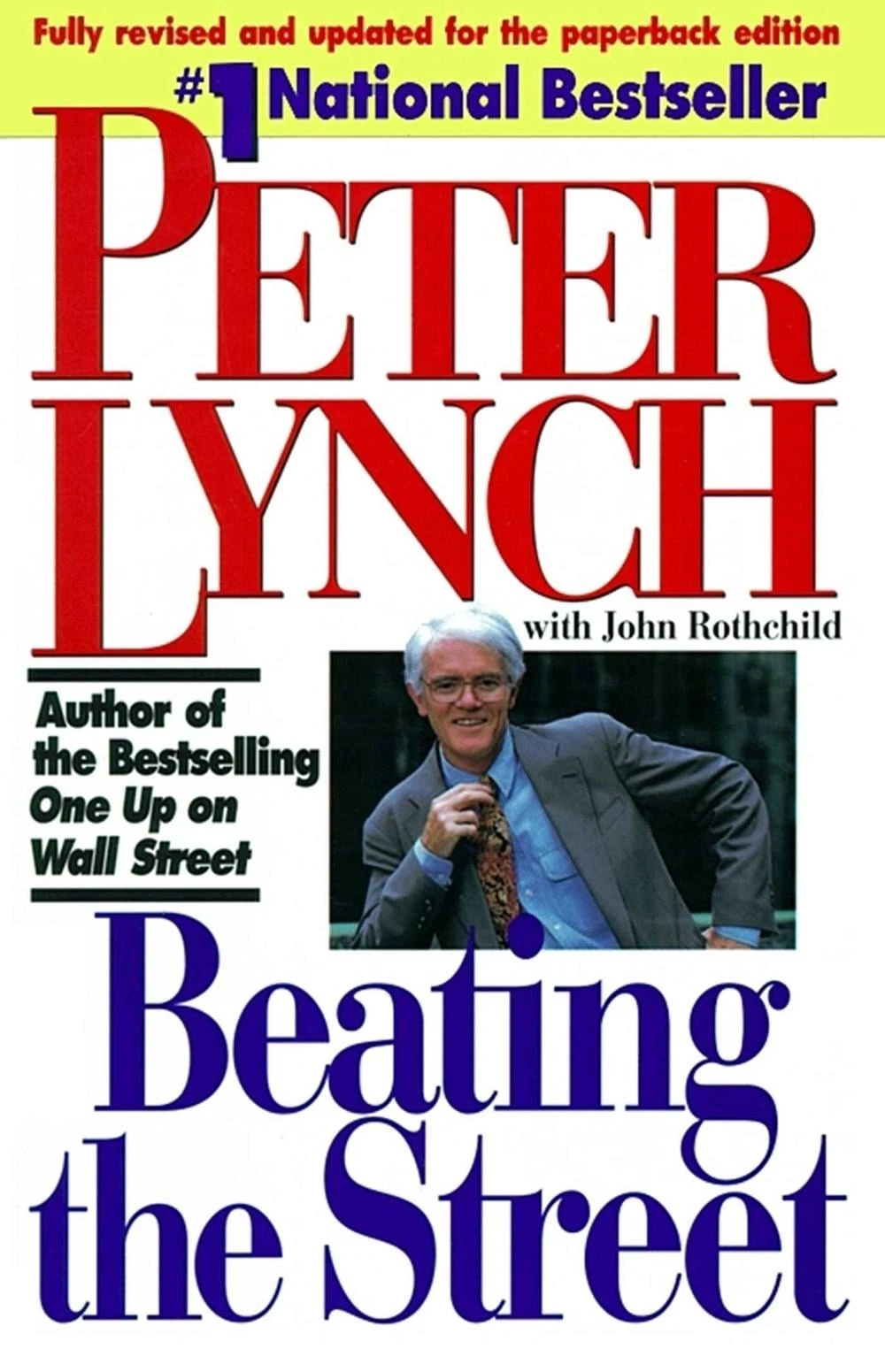
That world feels very far away now. The market has changed, the participants have changed, and the very idea of what it means to have an edge has been rewritten. Yet Lynch's philosophy remains a useful starting point for understanding how we got from the era of intuitive stock picking to today's landscape of prediction markets, probabilistic forecasting, and a financial system that increasingly resembles a high speed casino. The journey between these two poles tells us something important about the evolution of investing, and about the role financial advisers should play in a world where the old tools no longer fit the new terrain.
The Amateur Edge and Its Limits
Lynch's core belief was that amateurs could exploit informational advantages that professionals overlooked. He was not advocating for reckless speculation or blind enthusiasm; he was arguing that the world itself was full of signals, and that the attentive observer could spot them. But even in Lynch's time, this was a narrow path. It required genuine familiarity with a business, a willingness to dig into the fundamentals, and the emotional discipline to hold through volatility. Lynch never claimed that everyone should pick stocks. He claimed that those who truly understood a company better than Wall Street might have a chance.
The Rise of the Superforecasters
Fast forward a decade or two, and the intellectual climate around forecasting began to shift. Philip Tetlock's research, culminating in Superforecasting, challenged the idea that intuition or expertise alone could reliably predict outcomes. Tetlock's work showed that most experts were no better than chance when making long term predictions, and that the people who consistently outperformed were not the loudest voices or the most credentialed analysts. They were the ones who approached forecasting as a scientific discipline: breaking problems into smaller parts, updating their beliefs frequently, and treating every prediction as a probability rather than a proclamation.
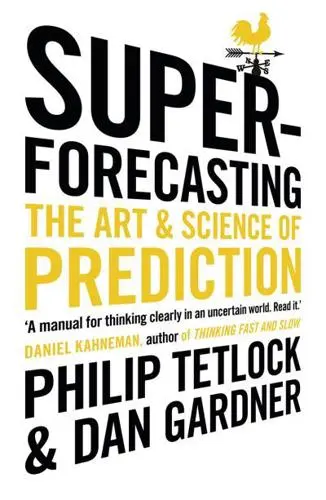
The rise of the superforecaster was a quiet revolution. It suggested that the world was too complex for confident narratives and that humility, not conviction, was the real source of accuracy. The superforecasters were not necessarily industry insiders or market veterans. They were people who embraced uncertainty, who resisted the temptation to anchor on initial beliefs, and who were willing to revise their views as new information emerged. In a sense, they were the intellectual heirs to Lynch's amateurs, but with a very different toolkit. Where Lynch encouraged investors to trust what they saw in the world around them, Tetlock encouraged them to trust the process of disciplined, probabilistic reasoning.
When Markets Became Too Fast for Intuition & The Prediction Market Era Arrives
This shift from intuition to calibration reflected a broader transformation in markets themselves. As technology accelerated, information became more widely available, and the speed of price discovery increased dramatically. The edge that Lynch described, spotting a trend in a shop or noticing a product gaining traction, became harder to exploit. By the time an amateur investor noticed something, the market had often already priced it in. The rise of algorithmic trading, high frequency strategies, and vast data driven models meant that the competition was no longer between the amateur and the analyst, but between the amateur and the machine.
And then came prediction markets, a phenomenon that has grown rapidly in recent years and now occupies a strange space between finance, forecasting, and entertainment. Platforms like Polymarket allow users to bet on everything from election outcomes to economic indicators to the closing price of a stock on a given day. These markets are framed as tools for aggregating information and revealing the true probability of an event. In practice, they often function as a new form of gambling, where the line between informed prediction and speculative thrill seeking becomes increasingly blurred.
Prediction markets represent the culmination of a trend that began with the superforecasters: the idea that the world can be understood through probabilities and that markets can serve as mechanisms for aggregating those probabilities. But they also reveal the limits of this approach. When the subject of the bet is a stock price, the prediction market does not reward understanding of the business, its competitive position, or its long term prospects. It rewards the ability to anticipate short term movements, sentiment shifts, and the behaviour of other participants. It is a game of reflexes, not research.
The Clash Between Lynch and the Casino
This is where the contrast with Lynch becomes stark. Lynch's philosophy was rooted in the belief that the stock market ultimately reflected the performance of real businesses. Prediction markets, especially those tied to stock prices, reflect something else entirely: the collective guesswork of participants trying to outmanoeuvre one another in the short term. They are not about investing; they are about forecasting outcomes in a compressed timeframe, often with little regard for fundamentals. The rise of zero day options, meme stock frenzies, and retail leverage only reinforces this shift toward a market dominated by short term speculation.
The Era of Stock Picking Advisers Has Evolved, Not Ended
The journey from Peter Lynch to prediction markets is, in many ways, the story of how investing has matured. Lynch's world celebrated the amateur's intuition; the superforecasters celebrated disciplined reasoning; prediction markets celebrate probabilistic competition. Each stage reflects a different understanding of how information flows and how markets behave. But taken together, they also reveal something subtler about the advisory profession itself: the role of the financial adviser has not disappeared - it has simply migrated.
The truth is that many advisers quietly stepped away from stock picking years ago. The pure, Lynch style model of building portfolios one security at a time has become a rarity, surviving mostly in boutique wealth management shops or high net worth discretionary mandates where bespoke research teams still justify their existence. For most advisers, the shift has been decisive and irreversible. Costs, regulation, platform design, and the sheer time required to run individual stock portfolios have pushed the industry toward a different centre of gravity. The adviser's toolkit today is built around funds and, increasingly, ETFs, not because advisers lack skill, but because the structure of modern markets rewards scale, efficiency, and evidence based construction over artisanal security selection.
What has emerged in place of stock picking is a new kind of craft: the ability to navigate a universe of thousands of funds, each with its own quirks, exposures, methodologies, and hidden risks. Selecting the right building blocks, understanding index construction, evaluating liquidity, comparing replication methods, and aligning exposures with client goals has become the modern equivalent of the old stock picker's art. It is no less demanding, in some ways, it is more so, because the adviser must now master not just companies, but the architecture of the entire investment ecosystem. And only then comes the actual tactical over- or underweight of certain exposures.
Seen through this lens, the evolution from Lynch to superforecasters to prediction markets does not diminish the adviser's role. It reframes it. Advisers are no longer expected to outguess the market on individual securities; they are expected to design portfolios that harness the market intelligently. They are no longer judged by their ability to find the next ten bagger but by their ability to deliver consistent, transparent, risk appropriate outcomes. And in a world where prediction markets and high speed trading dominate the short term, that long term orientation is not a retreat, it is a competitive advantage.
So, the conclusion is not that the age of stock picking advisers is over in some dramatic, terminal sense. It is that the profession has already moved on. The real frontier now lies in mastering the ETF landscape, in understanding how to assemble exposures rather than hand selecting securities, and in guiding clients through a financial world that is faster, noisier, and more probabilistic than anything Lynch could have imagined. Advisers who embrace that shift are not abandoning the craft of investing; they are practising its modern form.
Until next time.
Allan Lane