The Great Inflow Inversion
On the trading desks of New York and London, the hierarchy of equity index trackers has long felt immutable. For more than thirty years, the SPDR S&P 500 ETF Trust (SPY), the original, monolithic $800-billion-plus bellwether launched by State Street in 1993, stood as the unchallenged monarch of global liquidity. Institutions, hedge funds, and market-makers treated its penny-wide spreads and cavernous options chains as the indispensable plumbing of world finance. SPY was not merely an instrument; it was the market itself.
Yet across the summer and autumn of 2026, an extraordinary inversion took hold. While SPY continued to grind out its customary institutional volumes, the real avalanche of fresh capital bypassed the king entirely. Instead, tens of billions of dollars in net new assets surged into its leaner, previously quieter sibling: the State Street SPDR Portfolio S&P 500 ETF (SPYM).
Carrying a rock-bottom expense ratio of just 0.02%, making it the cheapest unleveraged S&P 500 tracker in the United States, SPYM has amassed tens of billions in rapid inflows since July 4th, pushing its total assets past the $175 billion mark and driving State Street’s combined S&P 500 franchise across the historic $1 trillion frontier. For the first time in modern market history, the flagship liquidity titan was comprehensively outpaced in net organic asset gathering by its own low-cost portfolio variant.
The catalyst behind this tidal wave was not an organic epiphany among retail day traders, nor a sudden rotation by quantitative macro funds. It was the heavy, deliberate hand of the federal government.
The origins trace back to the SECURE 2.0 Act, passed by Congress and signed into law by President Joe Biden in late 2022. Designed as a sweeping overhaul of the American retirement apparatus, the legislation contained an ambitious mechanism known as the Saver’s Match, a fully refundable federal matching contribution intended to replace the antiquated Saver’s Credit. Under the statutory framework, the federal government pledged to match 50% of qualifying retirement contributions up to $2,000 per worker, depositing up to $1,000 per year directly into tax-advantaged accounts to compound over decades.
When the Trump administration took office, this savings architecture intersected with a signature White House push for universal asset-building accounts. Rolled out to fanfare on the 250th anniversary of American independence on July 4, 2026, the newly enacted savings framework seeded millions of American accounts with initial federal capital. But the decisive structural intervention was regulatory: the Treasury designated SPYM as the exclusive default investment vehicle for these state-seeded accounts.
In a single stroke, an administrative decision turned a low-cost passive ETF into a multi-billion-dollar conduit for automated, state-sponsored inflows.
The Silent Road to Serfdom: Capital Allocation Without Capitalists
To any student of modern financial theory, the spectacle of a central government establishing a sovereign pipeline directly into an index fund ought to trigger a sharp sense of intellectual vertigo. It resurrects a controversial warning that convulsed the asset management world a decade ago.
In August 2016, a research team at Sanford C. Bernstein & Co., led by strategist Inigo Fraser-Jenkins, dropped an analytical grenade onto Wall Street titled "The Silent Road to Serfdom: Why Passive Investing is Worse Than Marxism."
The thesis was deliberately incendiary. Fraser-Jenkins argued that while a classic Marxist command economy is notoriously inefficient, its central planners at least attempt to allocate capital logically. A Soviet bureaucrat in Gosplan evaluated whether a tractor factory in the Urals or a wheat collective in Ukraine required fresh resources, making qualitative judgments, however flawed, about utility and production.
Passive investing, the Bernstein team countered, does not even attempt to think. A pure market-cap-weighted ETF mechanically directs capital based solely on current enterprise size. It funnels cash into a corporation not because the firm possesses visionary management, robust cash flow yields, or groundbreaking research, but simply because the company was large yesterday afternoon. If an entire economy were to abandon active management and outsource capital allocation entirely to passive indices, the price-discovery mechanism that underpins free-market capitalism would cease to exist. Capital would be distributed blindly, without analysis, scrutiny, or human discernment. In Fraser-Jenkins’ provocative formulation, an economy governed exclusively by mechanical indexation would deliver an even worse misallocation of societal resources than the economic doctrine of Karl Marx.
The bitter irony unfolding across 2026 is impossible to ignore. Passive indexation is no longer just a private market preference driven by cost-conscious retail allocators; it has become an instrument of public statecraft.
Consider the political lineage: a statutory framework conceived and signed by a Democratic president (Biden) was enacted, branded, and operationalized by a populist Republican administration (Trump), with both sides of the aisle uniting to build an automated, government-funded escalator directly into an equity index. Public tax dollars and state mandates are now actively driving market beta, picking a single corporate fund manager, and automating the very dynamic Bernstein warned about: capital allocation by statutory edict.
The Precedent Across the Pacific: When the State Swallows the Market
While Washington may view its seeded index program as a novel experiment in popular capitalism, policymakers in Tokyo can offer a sobering masterclass on what happens when the state becomes addicted to buying ETFs.
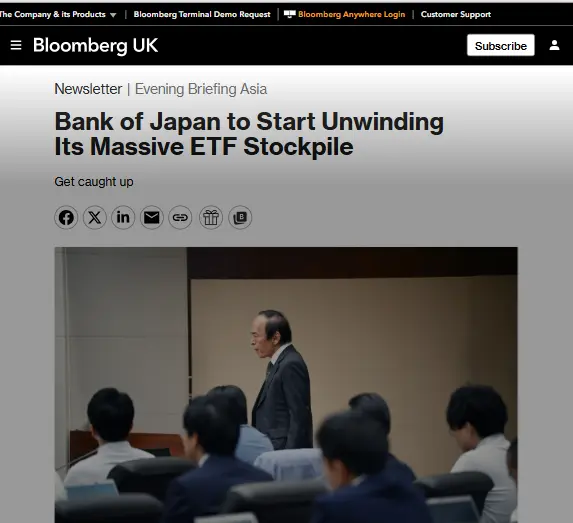 Figure 1 – Using ETFs as a Government Policy tool: Be careful what you wish for.
In 2010, facing chronic deflation and structural stagnation, the Bank of Japan (BOJ) embarked on an unprecedented monetary experiment: purchasing domestic equity ETFs directly onto the central bank’s balance sheet. The stated goal was classic reflationary doctrine: to compress the equity risk premium, lower the corporate cost of capital, stimulate the wealth effect, and shock animal spirits back into the Japanese economy.
Under the aggressive banner of Abenomics beginning in 2013, the BOJ escalated this policy from an emergency valve into an industrial-scale buyer of first resort. Annual purchasing targets were doubled, tripled, and doubled again- climbing from ¥1 trillion to ¥3 trillion, then to ¥6 trillion, and finally peaking at an astonishing ¥12 trillion per year during the COVID-19 panic of 2020. Note: ¥1 trillion is approximately $6.32 billion at the time of writing.
For a time, the policy appeared brilliant. Equity markets rallied, foreign investors returned to Tokyo, and corporate sentiment stabilized. But the long-term structural side effects eventually became toxic:
- The Evaporation of Price Discovery: The BOJ’s mechanical purchasing rules, triggered on any morning session where the TOPIX dropped by more than 0.5%, created an artificial government-made market. Stock prices detached from corporate fundamentals as traders front-ran central bank liquidity.
- The Silent Shareholder Plague: Because the BOJ held index wrappers, it acted as a passive, non-voting owner. Corporate boards faced no direct shareholder pressure, entrenching executive complacency and neutralizing governance reforms.
- Monopolistic Absorption: By the time the BOJ officially shuttered the program in March 2024, it had consumed roughly 83% of Japan's entire domestic ETF universe, accumulating over ¥74 trillion in equity assets.
The program became a monetary roach motel: effortless to enter, but treacherous to leave. The BOJ found itself holding a massive equity portfolio where a sustained market downturn threatened to wipe out the bank's capital reserves. By late 2025, policymakers were forced to map out a glacial, decades-long exit plan to offload ¥330 billion per year, desperately trying not to crash the very market they spent fourteen years inflating. Japan discovered firsthand that when the state steps in to replace natural price discovery, it eventually paralyzes the market.
To be fair, central bank ETF interventions do not always lead to systemic addiction. In the spring of 2020, the U.S. Federal Reserve broke its own historical taboos by launching the Secondary Market Corporate Credit Facility (SMCCF), utilizing corporate bond ETFs to unfreeze a seizing credit market. But the Fed understood the danger of overstaying its welcome: it acted purely as a liquidity bridge, stabilized primary issuance, paused purchases within months, and liquidated its entire ETF portfolio by the end of 2020 without disrupting market plumbing.
The fundamental distinction lies between emergency stabilization and permanent structural deployment. While the Fed used ETFs as a surgical tourniquet, programs that establish open-ended, statutory inflows risk drifting toward the BOJ's quagmire.
The American Dialectic: Innovation or Monopolistic Distortions?
Proponents of the American program argue that whatever ideological contradictions exist on paper, the policy moves the dial where decades of traditional financial literacy campaigns failed. By providing a direct monetary incentive through the Saver’s Match and automating the operational journey, millions of lower- and middle-income families who were entirely shut out of Wall Street are now equity owners participating in the compounding power of the broader economy.
Yet the backlash from financial analysts, tax economists, and governance watchdogs has been fierce. First, critics point to the profound concentration risk baked into a market-cap-weighted default. Directing billions of dollars exclusively into an S&P 500 tracker like SPYM means that a staggering portion of every public dollar flows directly into the largest technology monopolies, the Magnificent Seven. Rather than allocating capital into local infrastructure, small business lending, or high-productivity capital expenditure, the federal government is effectively operating an automated price-support program for Silicon Valley mega-caps.
Second, the statutory mandate locks young and vulnerable savers into 100% equity exposure. Fiduciary best practice dictates lifecycle glide paths, such as target-date funds that gradually shift capital into short-duration fixed income to protect against catastrophic market crashes right when an individual reaches adulthood. Forcing an unhedged equity mandate onto everyday savers leaves their nest egg completely exposed to the violent swings of the economic cycle.
Finally, there is the unresolved tension over corporate favouritism. In handing the exclusive default status to a single product, the state effectively granted State Street an unassailable commercial monopoly over generations of new investors, bypassing competitive open-architecture platforms like Vanguard or BlackRock.
A British Blueprint? The Merits and Pitfalls of a UK Equivalent
Across the Atlantic, the debate has inevitably surfaced in the City of London. Could the UK government deploy a similar, state-mandated savings program to revive its own stagnant domestic capital markets?
On paper, the blueprint is tempting: create a modernized, digital successor to the early-2000s Child Trust Fund, seed every British citizen's account at birth, provide an automated government match, and designate the oldest and most liquid tracker on the London Stock Exchange, the iShares Core FTSE 100 UCITS ETF (ISF), as the default national savings engine.
The arguments in favour are compelling:
- Resuscitating London's Valuation Squeeze: The London Stock Exchange has spent years enduring chronic institutional outflows, depressed price-to-earnings multiples, and high-profile domestic champions fleeing to New York for richer valuations. A guaranteed, permanent retail bid flowing into ISF would re-anchor domestic equity demand and help defend the UK listing regime.
- Radical Simplicity: At a Total Expense Ratio of just 0.07%, ISF provides frictionless, rock-bottom-cost exposure with flawless secondary-market liquidity.
Yet the obstacles to such a policy are immense:
- The Old Economy Trap: While the S&P 500 is a growth engine driven by technology, software, and dynamic global enterprise, the FTSE 100 remains an index dominated by legacy sectors, oil, mining, banking, and tobacco. Locking British children into a domestic-only index would maroon their multi-decade savings in a structurally slower-growing market, sacrificing the returns of global diversification (such as an MSCI World or All-World tracker) for the sake of economic nationalism.
- The Political Ghost of the British ISA: When HM Treasury previously floated the idea of a £5,000 British ISA reserved exclusively for UK-listed assets, the wealth management industry rebelled. Advisers rightly pointed out that forcing savers into a single, underperforming geographic silo violates basic fiduciary principles. The policy was quietly discarded.
- Fiscal Austerity: The original Child Trust Fund was cancelled in 2011 because the Exchequer could no longer afford the universal voucher subsidies. In today’s high-debt fiscal environment, funding a universal multi-billion-pound savings match would clash directly with the Treasury’s strict borrowing rules.
- The Geopolitical Optics: Finally, awarding an exclusive public mandate to iShares, a flagship subsidiary of BlackRock, the quintessential American asset management colossus, would spark immediate outrage across the UK financial establishment, leaving domestic giants like Legal & General and Schroders wondering why British taxpayers are subsidizing Wall Street.
The Ultimate Irony
The rapid rise of SPYM proves that when the state steps in to automate wealth creation, the financial plumbing responds with breathtaking scale. Whether this evolution represents the ultimate democratization of capital or an unthinking drift toward structural market distortion depends entirely on which side of the ideological ledger you sit.
Yet as the debate rages between free-market purists and policy interventionists, one cannot help but appreciate the supreme historical irony of the vehicle sitting at the epicentre of this financial revolution.
Ten years ago, critics warned that unthinking passive investing was quietly ushering in a Marxist dystopia by replacing independent capital allocation with bureaucratic conformity. Today, the single corporate institution chosen by the government to manage the public’s capital, automate the proletariat's savings, and collect the fees on this grand national experiment is an entity literally named State Street.
Karl Marx would have certainly enjoyed the branding.
Irene Bauer