In the rapidly evolving financial landscape of 2026, the success of Exchange Traded Funds (ETFs) is no longer just about low fees or broad market access. A transformative shift is underway in how ETFs are perceived and utilized, one that positions the ETF wrapper not merely as an investment vehicle, but as a Financial Operating System (FOS).
This new interpretation views the ETF wrapper as a modular, programmable platform that enables seamless integration, customization, and interaction with a client’s broader financial ecosystem. Much like an operating system in technology, the ETF wrapper provides the infrastructure and protocols that allow diverse financial applications, data streams, and compliance rules to operate harmoniously.
Key players in the White Label ETC eco-system include, HANetf, Waystone, Xtrackers, AllFunds, Ossiam, and perhaps most interestingly the news that State Street Global Advisors will offer ETFs as a service.
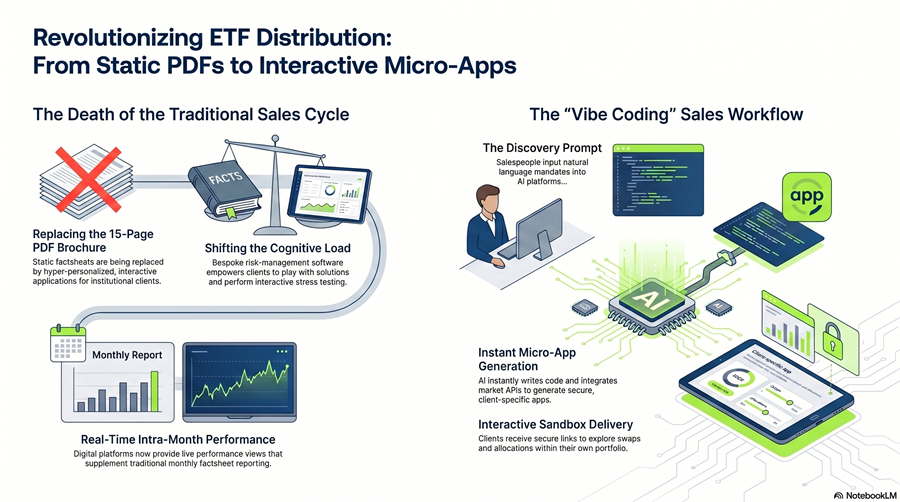 Figure 1 – The White Label Ecosystem: Mapping the key players driving the 'ETFs as a Service' model.
With the onset and influence that a new generation of vibe coders bring to the table, the era of hyper-personalization is within grasp. Vibe coding has its many critics but in truth it shares a lot in common with the growth in the ETF white label industry, not having the complete expert knowledge to build an app or the detailed knowledge to structure a complex investment product is no longer a barrier to entry. In 2026, if you have an idea for a new software service or ETF – then got for it!
The trend for the democratization of the fund management industry has been around since day one, but with the advent of Generative AI it now appears as a force that is unstoppable. Don’t be surprised if in the next meeting with one of your clients they show you an app that they have built that challenges your own offering.
The Dual-Share Class Breakthrough
The 2024-2025 regulatory shift allowing ETFs to exist as a share class of an existing mutual fund acted like a system update for the industry. Historically, active managers were hesitant to launch ETFs because it meant managing a separate pool of capital. Now, they can bolt an ETF output onto their existing multi-billion dollar flagship strategies.
This has led to a mass migration of elite Active Managers – who previously avoided the transparency of the wrapper – porting their intellectual property into the ETF operating system. For the first time, institutional clients can access Star Manager alpha with the tax efficiency and liquidity of an ETF.
Unfortunately, this tax efficiency benefit does not extend to the UK & Europe but does go a long way to explain the mind boggling fact that Dimensional Fund Advisors in the US now manages over $250bn in AUM within an ETF wrapper.
To this we can add the SEC Rule 18f‑4 (2022) in the US that is best known as The Derivatives Rule, which modernizes how registered investment companies (mutual funds, ETFs, closed-end funds) use derivatives. This has led to an explosion in new products in the US, UK & Europe. Regulation differs across each territory, with the US offering the most scope for innovation. Nonetheless, we now routinely talk about Buffer ETFs, Defined outcome ETFs, Accelerated return ETFs, Downside protected ETFs and Target outcome ETFs.
Why the ETF Wrapper as a Financial Operating System Matters
This conceptual shift unlocks unprecedented flexibility and power for asset managers and investors alike. Instead of ETFs being static products, they become dynamic building blocks within a client’s portfolio architecture. This enables:
- Interoperability: ETFs can plug into various portfolio management systems, risk analytics engines, and compliance frameworks.
- Customization: Investors can tailor ETF allocations dynamically based on changing market regimes and evolving mandates.
- Automation: Portfolio adjustments, tax optimization, and risk monitoring can be automated through programmable rules embedded in the ETF wrapper.
- Transparency and Control: Clients gain granular visibility into underlying holdings and risk exposures, with the ability to simulate changes instantly.
 Figure 2 – Programmable Finance: Leveraging Vibe Coding to create bespoke risk-monitoring and distribution micro-apps.
However, with innovation one faces the next rung of the learning curve ladder. For example, how does one go about incorporating these new payoff structures into your own risk rated ETF Model Portfolios?
Likewise, keeping up with the avalanche of new ETF launches is proving an impossible task, fortunately this is where AI comes to the rescue. All it takes is a few days of vibe coding and designing a couple of carefully crafted AI Agents that do the donkey work via an account on Claude’s Co-Work platform or on Google’s Antigravity coding engine. Before you even have had your meeting with an ETF Data Provider, your own personal agent will have assembled detailed explanations and provided the core information about the ETFs of interest to you.
The Death of the Traditional Sales Cycle and the Rise of Micro-Apps
Given this brave new world where ETFs function as financial operating systems, it is only natural that the traditional sales cycle, anchored in static PDFs and generic pitches, is becoming obsolete. Instead, the industry is witnessing the rise of micro-apps: hyper-personalized, interactive applications that bring the ETF wrapper’s full potential to life for each client.
Historically, ETF sales teams approached institutional clients armed with 15-page PDF brochures and factsheets detailing historical performance, top holdings, and expense ratios. But institutional clients don’t invest in ETFs in isolation, they care about how an ETF behaves within their complex, multi-asset portfolios.
Every day we read articles re-enforcing the message that launching an ETF is nothing without distribution – but as explained above, as technology raises the bar at every point along the value chain, don’t expect the old ways of distribution to cut it. Paying for a seat at the distribution point will always win the day, but with so many new products coming to market there is still competition within that sales channel. If you want to have an edge, then maybe you should consider building an app for your distributor that makes them look good and offers a free service to their end investors.
In 2026, salespeople no longer need to wait weeks for quant teams to deliver custom analyses. Instead using advanced AI platforms, the options are
- The Discovery Prompt: After a client meeting, the salesperson inputs a natural language prompt into their firm’s Agentic AI platform, e.g., "Build an interactive app simulating swapping 5-15% of one ETF for our 'NextGen Best in Market ETF', considering their $500M portfolio and investment mandate."
- Instant Generation: The AI writes the code, integrates real-time market data APIs, and generates a secure, client-specific web app.
- Micro-App Delivery: The client receives a secure link to an interactive sandbox pre-loaded with their portfolio, enabling real-time scenario exploration.
Implications and Future Outlook
Let’s face it, stress testing can often win over sceptical clients
ETF issuers now provide bespoke risk-management software as a sales tactic, shifting cognitive load from clients to AI-powered tools. Those relying on PDFs see plummeting conversion rates, while vibe-coded apps empower clients to play with solutions interactively.
As sales teams evolve into AI-savvy facilitators, clients gain empowerment through interactive portfolio exploration. The ETF wrapper as a Financial Operating System, combined with vibe-coded micro-apps, heralds a new era of personalized, transparent, and efficient financial product sales.
Like any modern software firm, we use vibe coding at Algo Chain. Adding new functionality to an existing system isn’t always straightforward, though. One approach that has worked well with our distribution partners is leveraging our live Infosheets platform. To supplement the official Factsheet and KIID documentation that accompanies an ETP launch, or the marketing brochures that explain the details of a Risk Rated Model Portfolio, our platform provides an intra-month view on how well the ETP or Model Portfolio is performing as well as acting at the printing press that turns this webpage into a polished, print-ready factsheet.
To see this in action click here - Dynamic Growth Factsheet
Until next time.
Allan Lane